Free written scope consultation - allowances, timeline, and change-order rules on paper before a single trade is scheduled
Unilock Driveway & Pavers: The Pasadena Owner’s Guide
Replacing or adding Unilock pavers for a driveway, walkway, or patio in Pasadena typically costs $7,000 – $18,000 installed for a full driveway and $3,500 – $11,000 for a patio or walkway. We can usually begin work within one to two weeks, and the paver selection happens before any pricing is finalized. Most homeowners discover a problem the same way: a paver has shifted, a joint has opened up, or water is pooling in a spot that used to drain cleanly.
If you’re reading this, you probably already know which Unilock paver you have, or at least which color and shape caught your eye ten years ago. Maybe a few pavers near the street have settled, or the edge restraint along the driveway gave way after a heavy rain. Whatever brought you here, this page gives you the specifics: which Unilock product lines we work with most, what actually fails, what it costs to fix or replace, and what’s included in our written price.
One thing up front: Elmstead Remodeling Pasadena is an independent contractor. We are not affiliated with Unilock, but we install and repair their pavers regularly, and we know their product lines well enough to tell you when a repair makes sense and when you’re better off starting fresh.
Which Unilock Models This Applies To
Unilock makes three distinct paver families that show up consistently in Pasadena driveways and patios: the Estate Series (large-format, heavier units like Camelot and Courtstone), the Series line (mid-size units like Beacon Hill and Richcliff, often used for driveways that need to carry vehicle weight), and the traditional Holland/Brickstone lines that were popular in the 1990s and early 2000s. Each line has its own thickness spec: driveway-rated pavers run 60 – 80mm thick, while patio-only units are commonly 50 – 60mm. That thickness difference matters more than most homeowners realize.
Here’s the compatibility gotcha we run into at least once a month in Pasadena: a homeowner buys a pallet of 60mm pavers for a driveway replacement, but the original walkway was built with 50mm units from a discontinued color run. Matching old to new is rarely seamless. Edge profiles fade differently, and Unilock has retired several color blends over the years. If you can find the original purchase invoice, the SKU is printed on it and lets us identify the exact product. If you can’t, we take measurements, photograph the surface texture, and check the underside chamfer. We’ve been doing this long enough to identify most Unilock pavers by sight, but we always verify before quoting a partial repair.
On the OEM versus aftermarket question: for Unilock specifically, we recommend OEM pavers for any visible area. Aftermarket equivalents exist, but they rarely match the aggregate blend or surface finish of the original, and the color difference becomes obvious within a year of California sun exposure. For bedding sand, joint sand, and edge restraints, we use high-quality aftermarket materials because those sit beneath the surface and do the heavy lifting without affecting appearance. You’ll also hear us mention KraftMaid, Cambria, and Silestone in other contexts around the home, but for pavers, it’s Unilock all the way.
Styles & brands we work with
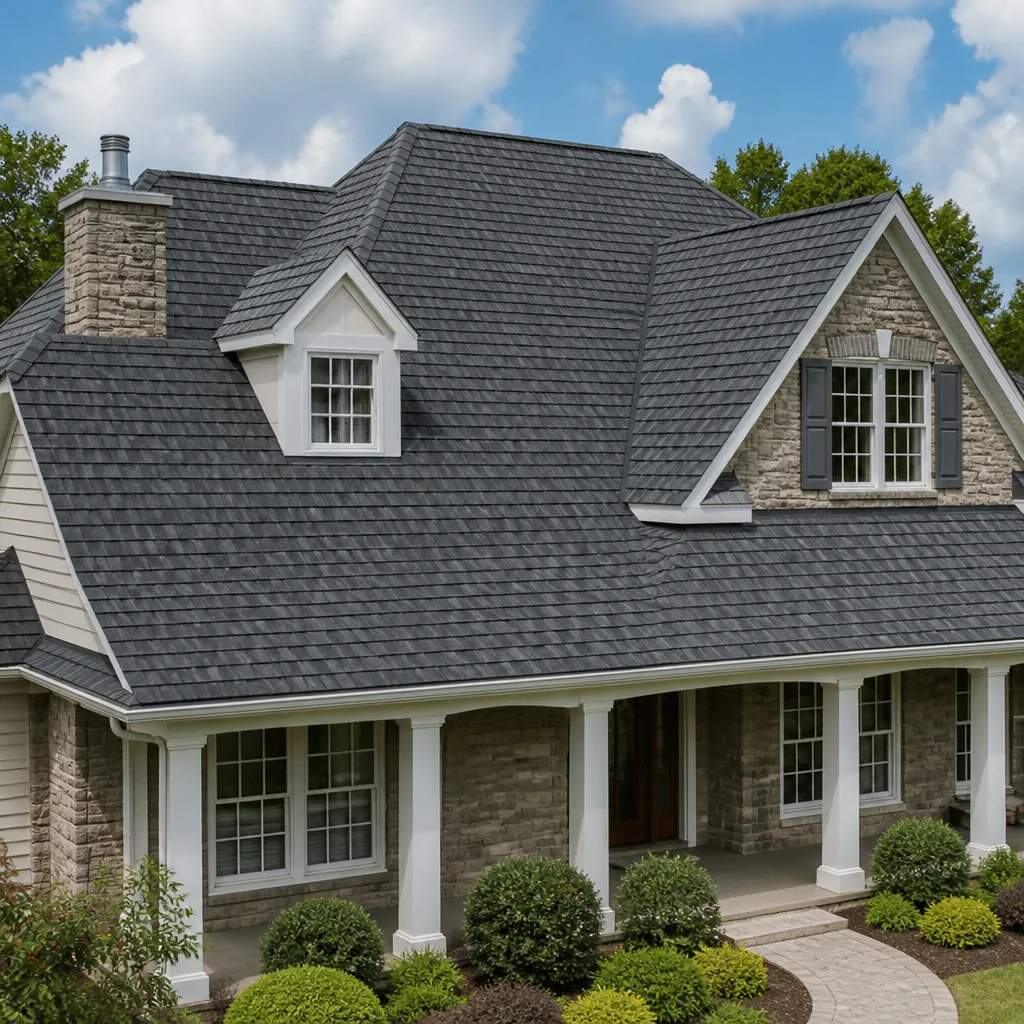
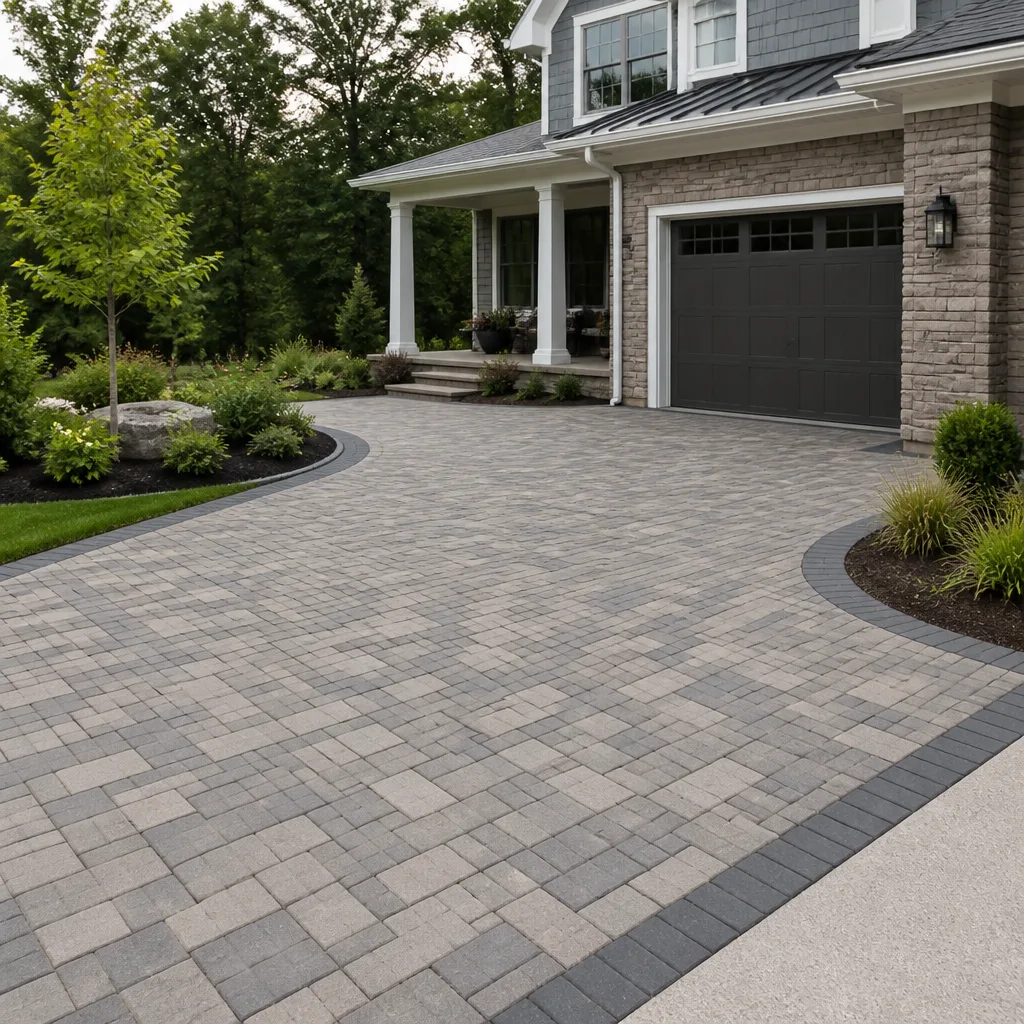
Signs Your Unilock Driveway & Pavers Are Failing
- Shifting or rocking underfoot. A paver that moves when you step on it means the bedding sand has eroded or washed out beneath it. In Pasadena’s compacted clay soils, this usually starts at the edges where drainage has been under-cutting the base for years.
- Widening joints with weeds pushing through. Joint sand wears down over time, and once it’s gone, soil migrates in. Weeds then sprout and the paver lock is broken. You’ll see this first on the south-facing side of the house where the sun bakes the sand dry.
- Sagging or rutting along tire paths. This points to a base layer failure, not a paver failure. Driveways built before 2005 often used a 4-inch base when today’s standard for vehicle traffic is 6 – 8 inches of compacted crushed rock. Pasadena’s rainy winters expose this quickly.
- Edge pavers pulling away from the restraint. The plastic or aluminum edge restraint can heave with temperature swings, especially along a driveway apron that meets the city sidewalk. Once the edge lets go, the entire field of pavers starts to drift outward.
- Pooling water in low spots. A properly graded paver driveway sheds water in minutes. Standing water that lasts more than an hour after a rain is a sign the slope has flattened, often because the base has settled unevenly beneath it.
None of these are cosmetic. A paver that moves is a paver that’s wearing against its neighbors, and the damage compounds quickly once the interlock is broken.
See the difference
 Before
 After
After Before
 After
After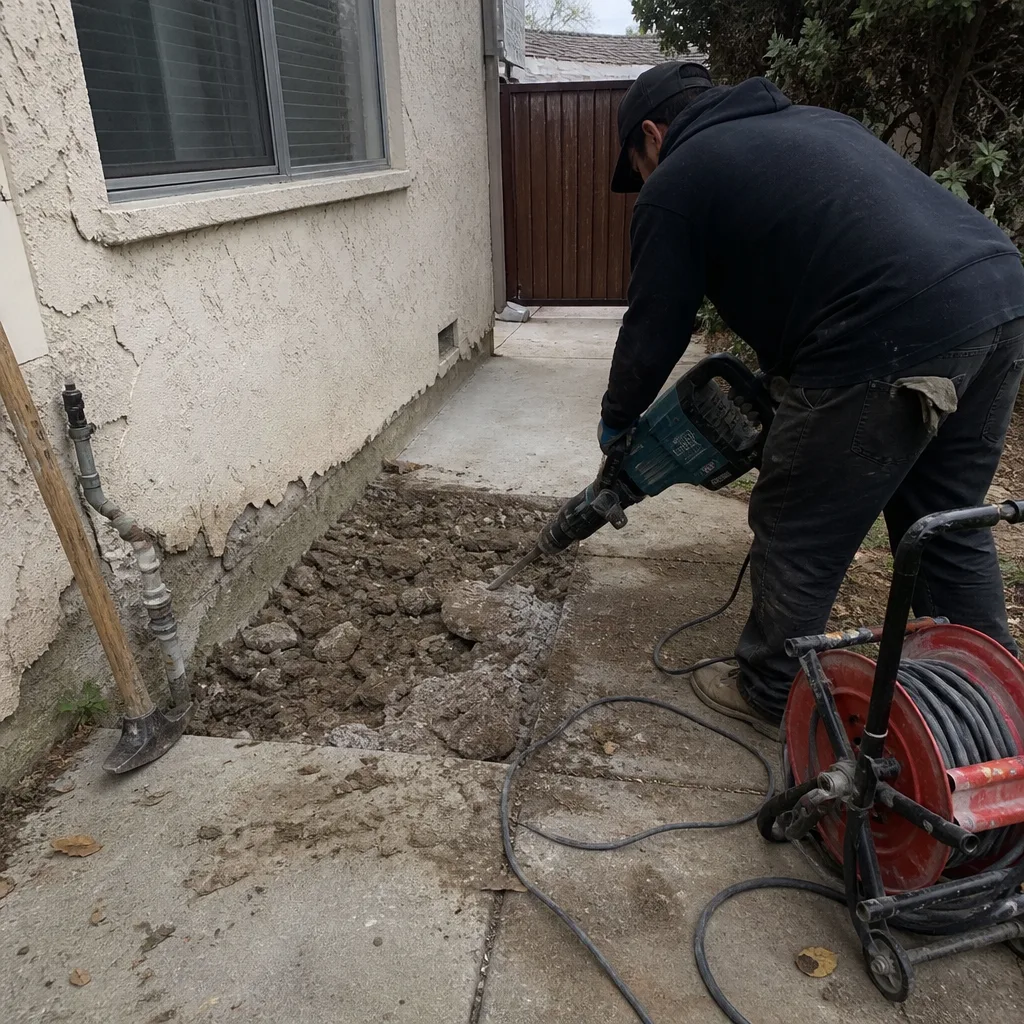 Before
 After
AfterReplacement Cost & What’s Included
Here’s what we quote in Pasadena, and these numbers reflect the market here, including hauling, base prep, and finishing:
- Paver driveway installation: $7,000 – $18,000, depending on square footage, base condition, and whether we can reuse the existing edge restraint.
- Paver patio installation: $3,500 – $11,000, shaped by the paver style you choose and the amount of grade correction needed.
- Driveway replacement (any material): $5,000 – $14,000, useful if you’re weighing pavers against concrete or asphalt.
- Driveway sealing: $250 – $700, which we recommend every 2 – 3 years for paver driveways in Pasadena’s sun exposure.
The biggest driver of the range is what’s under the pavers. If the original base is intact and well-compacted, we can do a repave without a full excavation. If the base has failed, removing and rebuilding it adds significantly to the project. You’ll see every line item in writing before we start, including the base depth we’re quoting, the paver product and quantity, the joint sand type, and the edge restraint. The price on paper is the price you pay at the end, no footnotes. And because this is a project, not an emergency, we don’t rush the quote or the work. We pull permits when Pasadena requires them and schedule inspections without drama.
Every paver project we complete carries our 365-Day Done Right Promise. If something isn’t right after we leave, whether it’s a settling paver or a drainage issue we should have caught, we come back and fix it.
DIY or Call Us?
Replacing a single cracked paver is something a careful homeowner can do with a pry bar, a bag of bedding sand, and an afternoon. That’s honest advice. Pull the damaged paver, add a thin layer of sand, and set the replacement. If you’ve got matching pavers stashed behind the garage, go ahead.
Where DIY goes wrong is anything involving the base. Once you’re removing more than a few pavers, you’re into excavation, compaction, and grading work that requires a plate compactor, laser level, and the judgment to know when the subgrade needs geotextile fabric. We’ve fixed enough homeowner attempts in Pasadena where a paver field looked fine for six months and then settled into a washboard. The repair after a DIY base failure costs more than doing it right the first time.
Also, paver work can involve cutting with a masonry saw, and the dust from cutting concrete pavers is silica dust. That’s not a casual weekend task without proper respiratory protection. If you’re on the fence, call us at (626) 714-2992 and we’ll talk through what you’re seeing. The estimate is free, and we’ll tell you honestly whether it’s a job for us or a Saturday for you.
FAQs
A properly installed Unilock paver driveway in Pasadena lasts 25 – 40 years, while the base beneath it may need attention at the 15 – 20 year mark. Our climate works in your favor: no freeze-thaw cycles to heave the pavers, though the summer sun does fade some color blends over time. Call (626) 714-2992 and we can look at your specific installation.
Yes, individual pavers can almost always be pulled and replaced without disturbing the surrounding field, as long as the damage is isolated and the base is still solid. If cracking is widespread or the pavers are shifting, that points to a base or drainage failure that a paver swap won’t fix. Call (626) 714-2992 and we’ll tell you which situation you’ve got.
Most paver driveway replacements in Pasadena take 3 to 5 working days from excavation to final compaction, with an additional day or two if we’re rebuilding the base or re-grading for drainage. Patios and walkways are usually 2 to 3 days. We schedule around your family’s routine and use quiet tools during nap and school hours where we can.
We stock common joint sand, edge restraints, and a limited selection of Holland and Series pavers on our trucks for quick repairs, but most Unilock products are ordered per project from the local Pasadena distributor. That ordering step is part of why we ask for a few days’ lead time, and we always confirm the exact SKU and color with you before placing the order.
Written by Graham Stein, Owner, Elmstead Remodeling Pasadena at Elmstead Remodeling Pasadena, serving Pasadena and nearby areas.