Last updated October 15, 2026

Free written scope consultation - allowances, timeline, and change-order rules on paper before a single trade is scheduled
Construction Cost Breakdown: The Pasadena Homeowner’s Reference for 2026
A Pasadena kitchen remodel that costs $85,000 includes roughly $6,000 to $9,000 in permit and inspection fees, $2,000 to $4,000 in Title 24 energy compliance upgrades, and about $1,500 in required debris hauling. None of those numbers appear in the national average articles that quote a $27,000 kitchen remodel. That gap, between what the internet says and what Pasadena actually requires, is what this guide and our Construction Permits, Codes & Inspections in CA: What You Need to Know resource close. You’ll learn the real line items, why they exist, and how to read a contractor’s price without getting surprised later.
Quick Answer
Pasadena remodeling costs run 15 to 25 percent above the national average, and the difference is not contractor markup. It’s permit fees, HPOZ design review costs, union labor minimums, and California-required materials upgrades that don’t exist in most other states. A homeowner who understands each line item before signing a contract negotiates from a stronger position and sees fewer change orders.
Styles & brands we work with
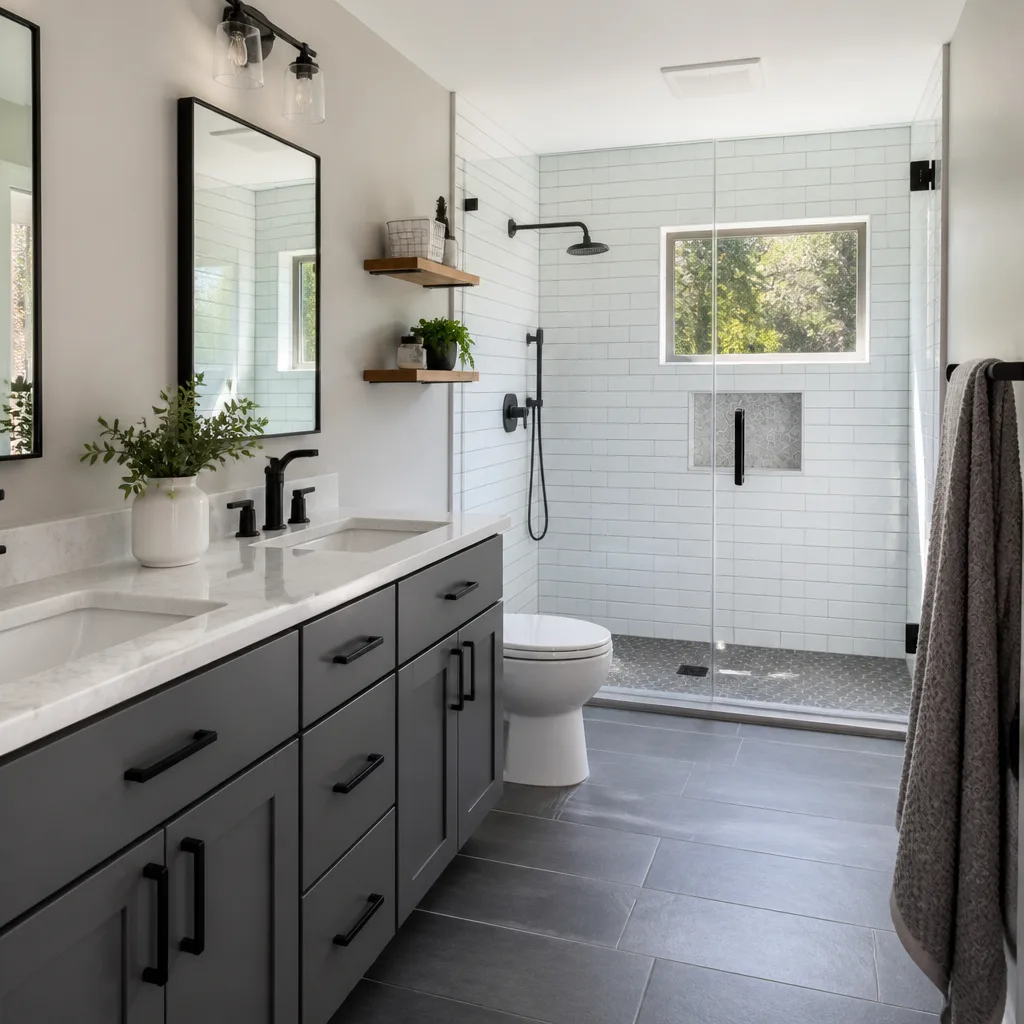
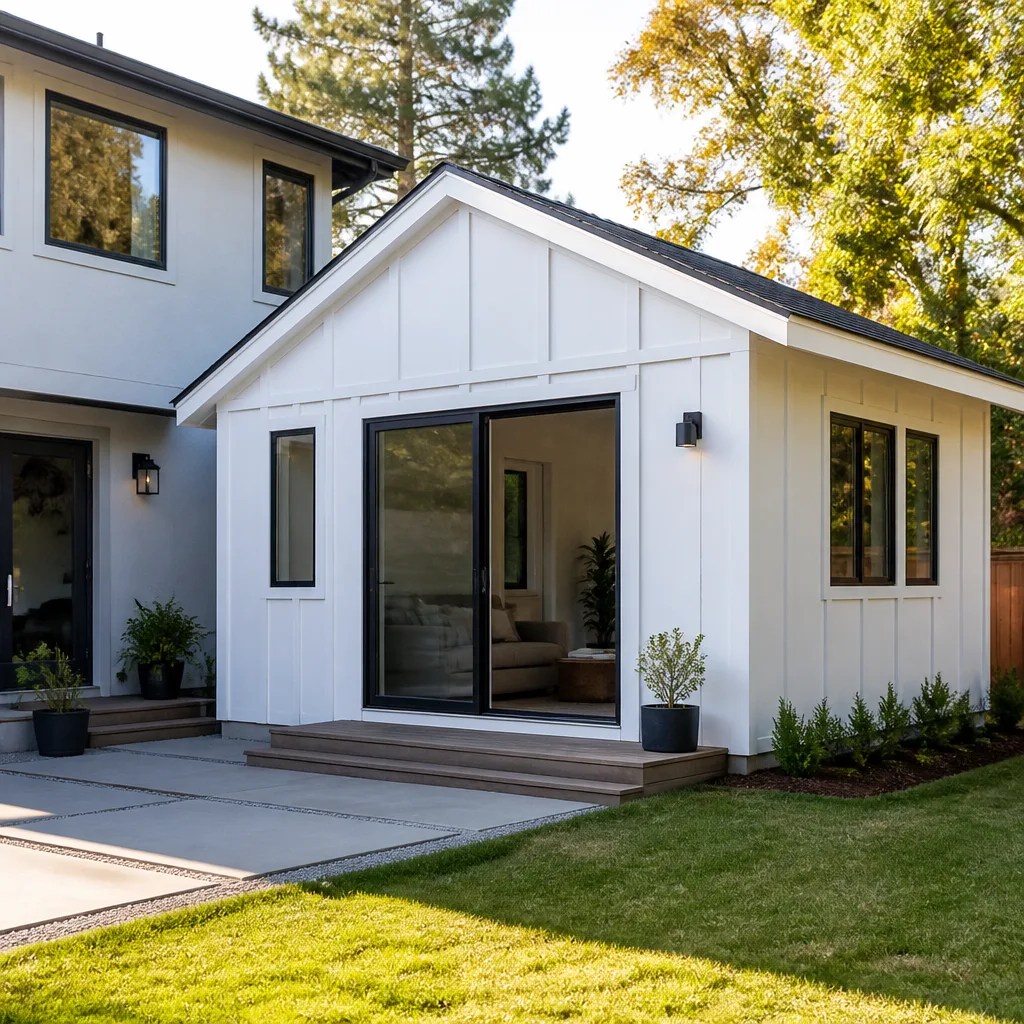
Table of Contents
- Project-by-Project Cost Ranges for Pasadena in 2026
- The California Cost Layers Every Pasadena Project Carries
- How HPOZ Designation Adds Cost and Time
- Written Price vs. Time-and-Materials: What Each Contract Type Exposes
- Named-Brand Materials at Each Price Tier
- What Labor Actually Costs in Pasadena Right Now
- How Project Timelines Affect the Final Invoice
- Common Mistakes to Avoid
- When to Call a Professional
- Frequently Asked Questions
Project-by-Project Cost Ranges for Pasadena in 2026
These ranges reflect what we’ve seen in Pasadena over the past two years, adjusted for 2026 material and labor pricing. The low tier assumes builder-grade finishes and minimal structural changes. The mid tier includes semi-custom cabinetry, mid-range fixtures, and some layout adjustments. The high tier means full custom work, named-brand materials throughout, and structural modifications.
| Project Type | Low Tier | Mid Tier | High Tier |
|---|---|---|---|
| Kitchen remodel (200 sq ft) | $45,000 – $60,000 | $65,000 – $95,000 | $100,000 – $150,000+ |
| Bathroom remodel (80 sq ft) | $25,000 – $35,000 | $38,000 – $55,000 | $60,000 – $85,000+ |
| ADU construction (500 sq ft) | $180,000 – $220,000 | $225,000 – $300,000 | $310,000 – $400,000+ |
| Room addition (400 sq ft) | $140,000 – $180,000 | $190,000 – $260,000 | $270,000 – $350,000+ |
| Full exterior repaint (2,000 sq ft home) | $8,000 – $12,000 | $13,000 – $18,000 | $19,000 – $28,000+ |
Kitchen remodels in Pasadena run higher than the Southern California average because many homes in the Madison Heights and Caltech neighborhoods were built before 1960, which means knob-and-tube wiring, cast-iron drain lines, and plaster walls that add labor hours to any opening. A kitchen remodel in Pasadena rarely stays surface-level once the walls come open. Bathrooms in the same vintage homes often hide rotted subfloor around the tub, which is why the low tier still lands near $25,000. ADU costs reflect the City of Pasadena’s accessory dwelling unit standards, which include setback rules and parking considerations that shape the foundation and framing budget from day one. For larger structural work, a general contractor in Pasadena handles the coordination between trades, inspectors, and material deliveries, and that coordination appears as a line item you should expect to see, not fear.
The California Cost Layers Every Pasadena Project Carries
California adds four cost layers to every remodeling project, and Pasadena adds a few of its own on top. These are non-negotiable. No contractor can waive them, and any contractor who says they can is cutting corners somewhere you’ll pay for later.
- CSLB workers’ compensation insurance. Every licensed contractor in California carries workers’ comp for their employees. The premium lands somewhere between 15 and 25 percent of payroll for remodeling trades, and that cost is baked into the labor rate you’re quoted. It protects you from liability if a worker is injured on your property. It’s not optional, and it’s one reason labor costs here exceed states without the same requirement.
- City of Pasadena permit fee schedule. Pasadena publishes its fee schedule annually, and the Building & Safety Division bases fees on project valuation. A $50,000 remodel typically carries $1,800 to $2,800 in building permit fees alone, before electrical, plumbing, or mechanical permits are added. Inspection fees appear per visit, and most projects require four to eight visits.
- Title 24 energy compliance. California’s energy code requires specific insulation values, window performance ratings, and lighting efficiency on any remodel that touches exterior walls, windows, or more than a set number of fixtures. The compliance documentation itself costs $500 to $1,500 depending on project scope, and the materials upgrades (better windows, higher-R-value insulation, LED fixtures) add another $1,500 to $3,000 to a typical kitchen or bathroom remodel.
- Mandatory debris diversion documentation. Pasadena requires that at least 65 percent of construction debris be diverted from landfill through recycling and salvage. That means separate bins, hauling to certified facilities, and paperwork filed with the city. The line item on most Pasadena projects runs $1,200 to $2,500, and it’s required before a final inspection will be signed off.
These layers explain most of the gap between a Pasadena remodel and a comparable project in, say, Phoenix or Dallas. They also explain why two Pasadena contractors bidding the same job should be within 5 to 8 percent of each other. A bid that comes in 20 percent lower is not a deal. It means someone is skipping insurance, or permits, or both.
How HPOZ Designation Adds Cost and Time
Pasadena has more Historic Preservation Overlay Zones than most cities its size. Bungalow Heaven, Garfield Heights, and parts of Madison Heights all carry HPOZ status, meaning exterior changes require design review before a permit is issued. Homeowners in these neighborhoods should consult our Construction Warning Signs: A Pasadena Homeowner’s Reference Guide and add real dollars and weeks to any project that touches the outside of the house.
The pre-application meeting alone costs $300 to $600 depending on the project scope. Formal design review adds another $1,500 to $3,500 in city fees. The review timeline stretches four to eight weeks in a city that already averages three to five weeks for standard permit approval. During that wait, a contractor who has committed a crew and a start date is paying to hold that schedule, and that cost appears as mobilization or schedule-hold line items.
Material restrictions inside HPOZ boundaries compound the cost. Where a non-HPOZ Pasadena home can install vinyl double-hung windows, an HPOZ property typically requires wood windows with specific muntin profiles, and those run 40 to 70 percent more per opening. Exterior paint colors require approval, and the approved palette often includes historically accurate formulations that cost more per gallon. If you’re planning a bathroom remodel that stays entirely interior, HPOZ adds little beyond the standard permit path. But if the project touches a window, a roofline, or any street-facing surface, budget for the review before you budget for the materials. A bathroom remodel in Pasadena that includes a new exterior vent or window must clear the same review, which is why the written price we provide always accounts for the design review timeline up front.
Written Price vs. Time-and-Materials: What Each Contract Type Exposes
The contract structure you choose determines how much of the risk you carry. We write prices before any work starts on every project, because a family with a budget deserves to know the number before the walls come open. But it’s worth understanding the alternative clearly.
A written, fixed-price contract means the contractor absorbs the risk of estimating. If they undercount the hours, that’s their problem, not yours. The trade-off is that a responsible contractor builds a contingency into the price, typically 8 to 15 percent, to cover unknowns behind walls and under floors. You pay slightly more on paper to cap your downside at the paper number.
A time-and-materials contract charges you the actual hours and actual material costs. The final invoice reflects what happened, not what was predicted. For projects where the scope is genuinely unknown, like a foundation repair that can’t be inspected until the slab is opened, time-and-materials can be fair. For a kitchen or bathroom remodel where the scope is well understood, a time-and-materials contract simply shifts the estimation risk onto the homeowner while the contractor has no incentive to move quickly.
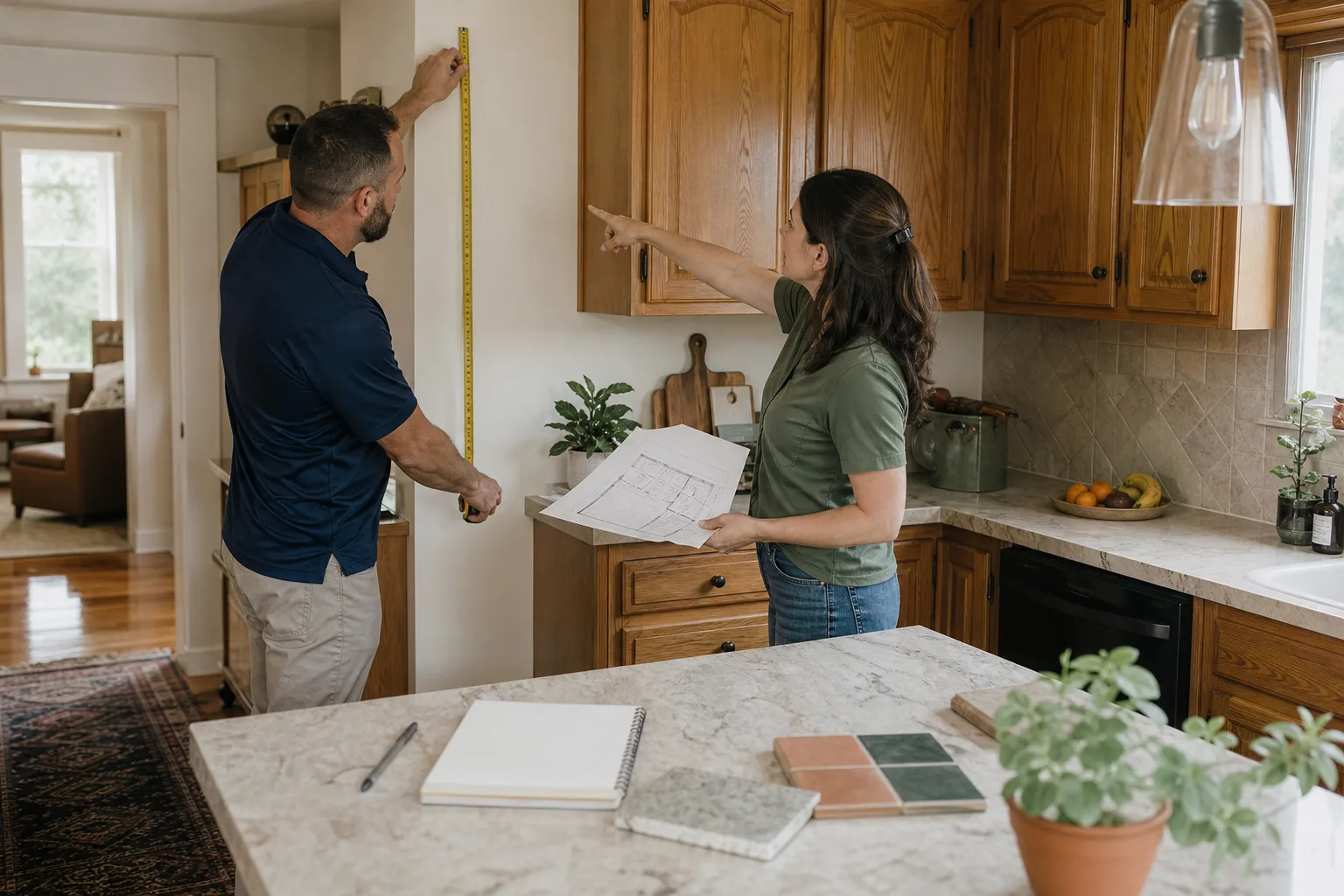
Industry data from Remodeling Magazine’s Cost vs. Value reports shows final costs on time-and-materials remodels average 12 to 18 percent over the initial written estimate, while fixed-price projects land within 2 to 4 percent when change orders are excluded. Change orders themselves are a separate conversation. A legitimate change order arises when you decide to upgrade a fixture or add a feature after the contract is signed. A change order that appears because the contractor “discovered” something a competent estimate should have caught is a red flag. The distinction matters. Our written price includes the cost of investigating the home before the number is set: checking joist direction, measuring service panel capacity, and verifying wall thickness in the rooms you’re changing.
Named-Brand Materials at Each Price Tier
One of the most useful exercises a Pasadena homeowner can do before the first contractor visit is to align materials to budget tier. It prevents the awkward moment where a price is set for Kohler Artifacts and the family’s budget was really Kohler Simplice. These are the products we reach for at each tier, and each comes with a manufacturer warranty you can verify independently.
Kitchen faucets: what changes between tiers
- Low tier: Kohler Simplice pull-down, which runs $180 to $300 at retail and carries Kohler’s lifetime limited warranty. Reliable, functional, and widely available.
- Mid tier: Moen Align or Kohler Bellera, in the $300 to $500 range. The difference is finish quality and spray function.
- High tier: Kohler Artifacts or Grohe Concetto, $600 to $1,200. These are the fixtures with substantial weight, visible detailing, and finish warranties that hold up to Pasadena’s hard water better than plated options.
Cabinetry: the largest single kitchen line item
- Low tier: Stock cabinets from a big-box brand, roughly $6,000 to $9,000 for a 10×10 kitchen. Limited door styles and finish options.
- Mid tier: KraftMaid semi-custom, $12,000 to $20,000 for the same footprint. Door style, finish, and interior accessory choices expand dramatically, and the warranty is solid.
- High tier: Wellborn full custom, $25,000 to $40,000 and up. Each cabinet is built to the room’s exact dimensions, and the finish is applied to order. This is where a Pasadena kitchen moves from remodeled to truly tailored.
Countertops: where the price visibly shows
- Low tier: Laminate or basic quartz from a stock yard, $45 to $70 per square foot installed.
- Mid tier: Silestone or Cambria in standard colors, $85 to $120 per square foot installed. Both offer consistent color and a 25-year warranty from the manufacturer.
- High tier: Cambria’s higher-end designs or natural marble, $140 to $200 per square foot installed. Marble etches and stains without sealing, which is why we show families a Cambria slab that mimics marble before they commit.
Knowing these bands before signing means the written price reflects what you actually asked for, and the brands are ones you can look up before the crew ever parks in your driveway.
What Labor Actually Costs in Pasadena Right Now
Pasadena sits inside the Los Angeles County prevailing wage zone for many public projects, but the private remodeling market sets its own rates. What you’ll see from licensed contractors in 2026: carpenters billing out at $85 to $120 per hour, electricians and plumbers at $120 to $180 per hour, and general labor at $55 to $75 per hour. These are loaded rates, meaning they include workers’ comp, liability insurance, payroll taxes, and in many cases a benefit contribution.
The union factor matters. Pasadena’s proximity to downtown Los Angeles and its history as a union-strong city means several trades on larger projects will be union members earning union scale. That’s not a hidden cost or a markup, it’s the local labor market. A three-person crew on a four-week kitchen remodel represents roughly $24,000 to $34,000 in labor alone before a single cabinet is installed.
When a homeowner compares two bids and one is dramatically lower, the labor line is usually where the difference hides. A contractor who pays cash under the table, skips workers’ comp, or misclassifies employees as independent contractors can bid 20 percent lower than a compliant shop. The homeowner who accepts that bid is taking on liability they may not understand until a worker is injured on their property and the claim lands on their homeowner’s insurance. We carry the insurance, we pay the premiums, and the price reflects it. That’s the deal, and it’s a good one.
How Project Timelines Affect the Final Invoice
Time is a cost driver most homeowners don’t see as a line item, but it’s there. A kitchen remodel that takes three months costs more than the same kitchen done in six weeks, not because of labor hours exactly, but because the contractor is running a business that pays for supervision, scheduling, and overhead across every calendar day the project occupies.
Pasadena adds time through its inspection scheduling. The city aims for next-day inspections but during peak building season, which runs March through October, a three-to-five-day wait for an inspector is common. Each wait period pauses work that depends on that inspection. Electrical rough-in waits for inspection before insulation can close the wall. Insulation waits before drywall. Drywall waits before finish trades. A project with six inspection points and a four-day wait at each adds nearly a month to the calendar, and that month is paid for in supervision hours, portable restroom rental, and general conditions.
Material lead times still haven’t returned to pre-2020 norms for some product categories. Custom cabinets from KraftMaid run six to ten weeks from order to delivery. Cambria slabs are typically three to five weeks out for less common designs. A contractor who orders materials the day the contract is signed keeps the project on schedule. One who waits until demo day costs the homeowner money in schedule float. Ask when the order goes in, and ask for it in writing in the contract.
Common Mistakes to Avoid
- Comparing Pasadena bids to national averages. The numbers you find online for a “typical” remodel rarely include California’s insurance requirements, Title 24, or Pasadena permit fees. You’ll under-budget by 20 percent before you start.
- Accepting the lowest bid without checking insurance. A bid that’s 20 percent below the others usually means someone is skipping workers’ comp or permits. Ask for the certificate of insurance and verify the policy is active.
- Starting an HPOZ-visible project before checking design review rules. Replacing windows or changing exterior siding in Bungalow Heaven without design review can stall the project for months and require you to redo work at your own cost.
- Signing a contract without a written change-order process. Every contract should state how change orders are priced and approved. Verbal changes are how a $65,000 kitchen becomes an $85,000 one without anyone being dishonest.
- Choosing finishes based on photos alone. A Cambria slab looks different in your kitchen’s light than it does on a website. Order samples, hold them in the room, and decide before the material order goes in.
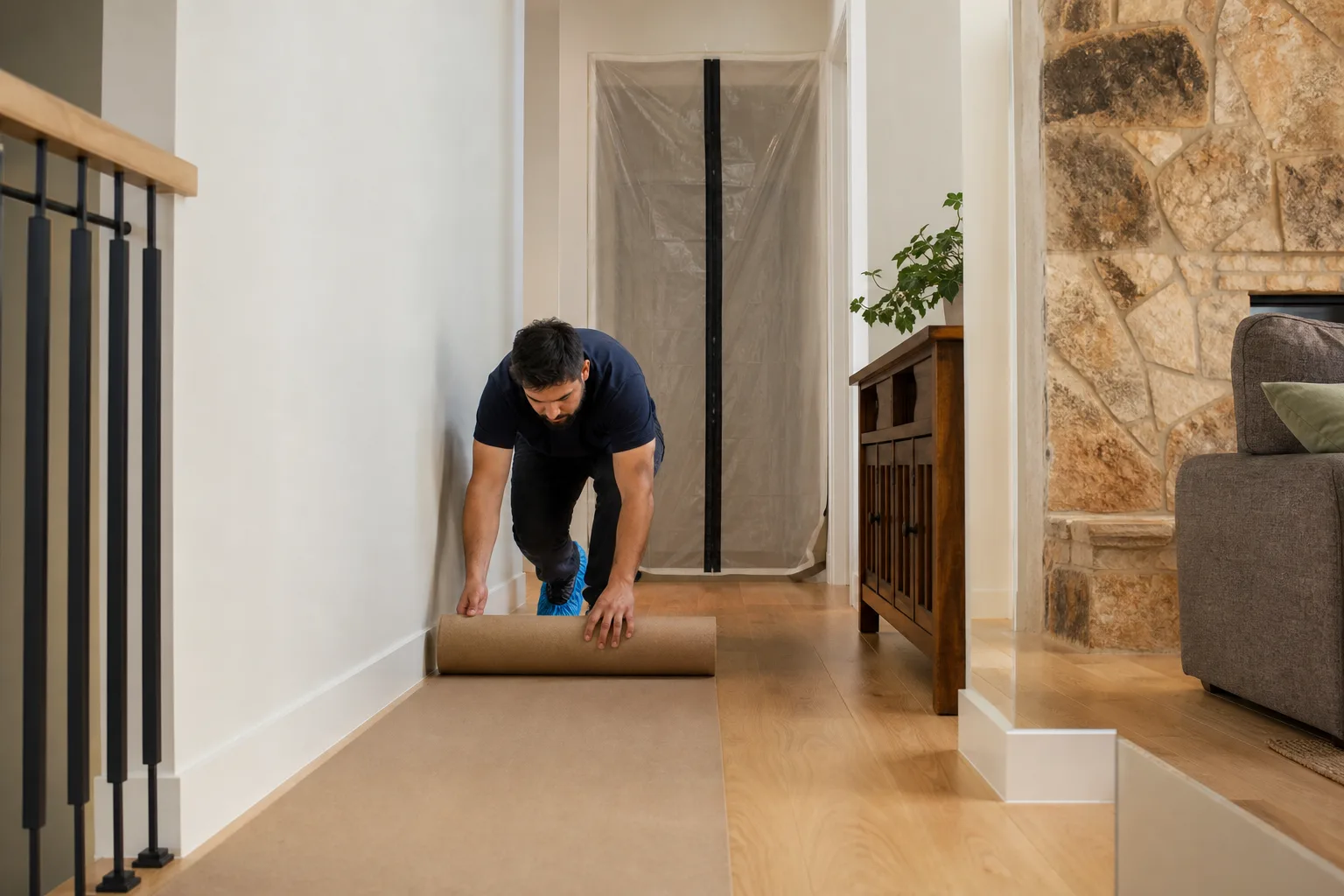
- Ignoring the clean-up and protection clauses in the contract. Who protects the floors, who moves the furniture, and who cleans up at the end of each day should be written down. If it’s not in the contract, it’s not promised.
When to Call a Professional
If your project involves moving plumbing, changing a load-bearing wall, altering any electrical circuit, or touching the exterior of a home inside an HPOZ, this is professional territory. The same applies to any project inside a home built before 1950, where asbestos, lead paint, and outdated wiring are real possibilities that require specific handling and disposal protocols. A licensed contractor carries the insurance, knows the inspection sequences, and has done this enough times to anticipate the surprises. Elmstead Remodeling Pasadena offers free estimates in Pasadena, with a written price before any work starts and shoe covers and drop cloths on every visit. Call (626) 714-2992 to schedule a walkthrough.
Frequently Asked Questions
A mid-tier kitchen remodel in Pasadena runs $65,000 to $95,000 for a 200-square-foot space, with the range driven by cabinet grade, countertop material, and whether the plumbing or electrical layout changes. Budget-kitchen work starts around $45,000, and full custom projects exceed $150,000. Call (626) 714-2992 for a written price on your specific kitchen.
Pasadena carries four cost layers most national averages ignore: CSLB workers’ compensation insurance on every worker, City of Pasadena permit and inspection fees, Title 24 energy compliance materials and documentation, and mandatory debris diversion paperwork. Those layers add 15 to 25 percent to a project before any contractor profit is calculated.
An HPOZ design review in Pasadena adds $1,800 to $4,100 in city fees between the pre-application meeting and formal review, plus four to eight weeks of timeline that a contractor must hold a schedule for. Material restrictions, like wood windows with specific muntin profiles, add another 40 to 70 percent to window replacement costs inside an HPOZ boundary.
For a kitchen or bathroom remodel with a defined scope, yes. Industry data shows final costs on time-and-materials remodels run 12 to 18 percent over the initial estimate, while fixed-price projects land within 2 to 4 percent when change orders are excluded. A written price caps your downside before the first wall is opened.
Budget 3 to 5 percent of the project valuation for City of Pasadena building, electrical, plumbing, and mechanical permits combined, plus inspection fees per visit. A $50,000 remodel typically carries $2,500 to $4,000 in total city fees, more if the project triggers HPOZ review or a planning-level review.
A mid-tier kitchen remodel in Pasadena takes 8 to 12 weeks from demo to final inspection, with HPOZ-adjacent or structural projects running longer. Inspection wait times during the March-to-October peak season add days between each phase, and custom cabinet lead times of 6 to 10 weeks mean materials should be ordered the day the contract is signed. Call (626) 714-2992 for a timeline specific to your project.
The Bottom Line
Pasadena remodeling costs are what they are because of regulations, labor reality, and a housing stock that’s older and more particular than most of the country. The number on a written price is not a negotiation trick, it’s a complete accounting. Understand the permit fees, the insurance, the Title 24 upgrades, and the HPOZ review process, and you’ll read every bid with clearer eyes. For more guides & resources, explore our blog. Choose the contract structure that protects your budget, align your material choices to your tier before signing, and ask for the clean-up and protection promises in writing. The goal is not the lowest number. It’s the number you can trust.
Written by Graham Stein, Owner at Elmstead Remodeling Pasadena, serving Pasadena since 2005.
See the difference
 Before
 After
After Before
 After
After Before
 After
After