Last updated October 15, 2026

Free written scope consultation - allowances, timeline, and change-order rules on paper before a single trade is scheduled
How to Hire a Construction Contractor in Pasadena: A Step-by-Step Guide
California’s CSLB license lookup takes about 90 seconds and shows you exactly which work classification a contractor holds. Fewer than one in five Pasadena homeowners complete it before signing a contract. That gap is why the CSLB fields over 20,000 complaints every year, many of them from homeowners who discovered too late that the person they hired was never licensed for the work they performed. This guide walks through the two checks that actually protect you: verifying the right license for your specific project, and reading the contract for what it omits rather than what it promises. For more guides & resources on protecting your home, see our blog. You’ll learn how to evaluate a written bid line by line, what questions to ask about child and pet safety during demolition, and how to tell a fixed written price from an estimate that can drift upward once the crew arrives.
Styles & brands we work with

Quick Answer
To hire a construction contractor in Pasadena, first verify an active CSLB license with the correct classification for your project (B for general building, plus specialty classifications like C-8 or C-35 where the work calls for them), then review the written contract for five specific omissions: start and completion dates, named subcontractors, lien waiver language, specified material brands, and defined daily quiet hours. Require a written price before any work starts, not an estimate, and confirm how the crew protects children, pets, floors, and air quality during demolition. At Elmstead Remodeling Pasadena home we put the written price in front of you before you sign anything, every time.
Table of Contents
- Step 1: Verify the CSLB License and the Right Classification
- Step 2: Read the Contract for What It Omits, Not What It Promises
- Step 3: Understand How to Read a Pasadena Bid
- Step 4: Ask How the Crew Protects Children and Pets
- Step 5: Require a Written Price, Not an Estimate
- Step 6: Confirm the Clean-Up Standard Before You Sign
- Common Mistakes to Avoid
- When to Call a Professional
- Frequently Asked Questions
- The Bottom Line
Step 1: Verify the CSLB License and the Right Classification
The California Contractors State License Board (CSLB) maintains a public database at cslb.ca.gov. Typing in a contractor’s name or license number takes under two minutes and shows the license status, the issue and expiration dates, any complaints, and the classifications the contractor actually holds. This matters in Pasadena because a contractor with an active license may still not be licensed for the work your project requires.
Here are the classifications to verify by project type:
- B – General Building: covers framing, structural work, and most full-home renovation scopes. A B license holder may coordinate specialty subcontractors. This is the minimum you want for a whole-home remodel or a kitchen addition in Pasadena.
- C-8 – Concrete: required for poured foundations, retaining walls, and structural concrete work. A B license alone does not authorize a contractor’s own crew to pour a foundation; that requires a C-8 holder on the job.
- C-35 – Lath and Plaster: covers lath, plaster, and stucco systems. Many Pasadena homes built before 1940 have original plaster walls, and patching or replacing them correctly requires this classification.
- C-54 – Ceramic and Mosaic Tile: covers tile installation. If your Pasadena bathroom remodel includes a shower rebuild, the tile setter should hold this classification or work under a general contractor who does.
- C-33 – Painting and Decorating: covers interior and exterior painting on renovation projects.
The point is not that every contractor must personally hold every classification. A qualified general contractor may bring in licensed subcontractors for specialty work. What you want to see, in writing, is which classifications are covered and who holds them. At Elmstead Remodeling Pasadena, our general contracting work is coordinated so that each specialty trade is licensed for the specific work it performs. Ask to see the license number for any subcontractor named on your job, then verify it yourself. It takes 90 seconds.
Step 2: Read the Contract for What It Omits, Not What It Promises
Most homeowners read a contract for what it includes: the scope, the price, the schedule. The more useful read is the opposite. What a contract leaves out tells you more about how the project will actually go than what it includes. In our experience serving Pasadena, five omissions appear again and again in contracts that later produce disputes.
- No written start and completion dates. A contract that says “work will begin as soon as reasonably possible” gives the contractor unlimited flexibility and you no recourse. Every contract should name a start date and a completion date, with a defined process for weather or permit delays.
- No named subcontractors. If the contract says “and subcontractors as needed” without naming them, you have no way to verify who will walk through your door. Require the names and CSLB license numbers of every subcontractor before you sign.
- No lien waiver language. If the contractor fails to pay a supplier or subcontractor, that party can file a mechanics lien against your Pasadena home. The contract should state that the contractor will provide lien waivers from every supplier and sub upon payment, protecting you from double payment.
- No specified brand of materials. “Tile” or “cabinets” in a contract lets the contractor choose whatever lowers their cost. The contract should name the specific materials, or at minimum a named brand tier, so you know what you are paying for before the first box is opened.
- No defined daily quiet hours. Families in Pasadena neighborhoods like Madison Heights and Bungalow Heaven live close together. If the contract does not say when crews arrive and when loud work stops, your toddler’s nap and your neighbor’s patience are both at risk.
We include all five elements in every contract, in writing, before any work begins. A thorough contract is not a formality; it is the single best predictor of how the project will go.
Step 3: Understand How to Read a Pasadena Bid
The lowest bid in a stack of Pasadena bids is rarely the cheapest job. It is usually the bid that excludes the most items. When you compare three bids side by side, look for what each one quietly leaves out.
Common exclusions in low bids:
- Permit fees. Pasadena requires building permits for most structural, electrical, and plumbing work. The city’s fee schedule is public. A bid that excludes permit fees will add them later, sometimes thousands of dollars.
- Debris hauling. Demolition creates dumpster loads of material. The bid should name who provides the dumpster, how many loads are included, and who pays the landfill fees. Omitted debris hauling can add $500 – $1,500 to a mid-size Pasadena remodel.
- Temporary dust barriers. Plastic sheeting, zip walls, and floor protection cost money and time. Bids that exclude them leave your living room under a layer of drywall dust.
- Structural shoring. Pasadena’s older housing stock, especially Craftsman and Spanish-style homes built between 1900 and 1940, often requires temporary support beams during wall removal. Unnamed shoring work is a common change-order surprise.
- Fixture allowances. A low bid may include a $75 faucet allowance. If you want a Moen or Grohe fixture, that’s a change order. The bid should name the fixture tier you are actually buying.
A mid-range bid that includes permits, debris hauling, temporary barriers, and named materials is often the true lowest cost by the end of the project. This is why our kitchen remodeling work in Pasadena always includes a written price with these items named, so the number you agree to is the number you pay.
Step 4: Ask How the Crew Protects Children and Pets
Parents in Pasadena asking about remodeling have the same first three questions: What happens to the dust, where do the tools go, and how do we keep our kids and dog out of the work zone. These are not afterthoughts. They are the questions that determine whether a family can stay in the house during construction.
Ask these questions before you sign:
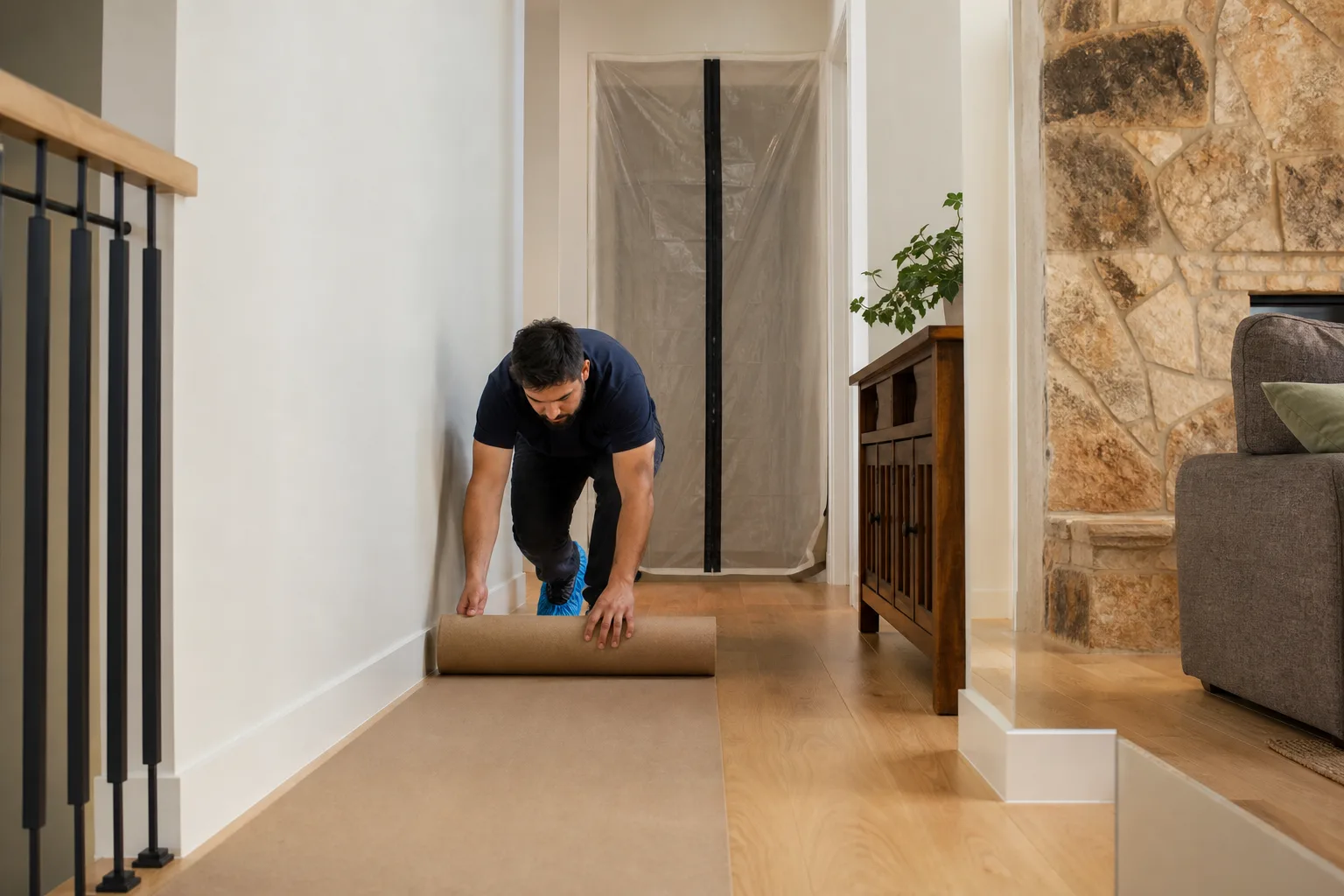
- How do you contain dust during demolition? The answer should name specific methods: zip wall barriers, negative air pressure with filtered exhaust, sealed doorways, and floor-to-ceiling plastic sheeting at the work boundary.
- Where do you store chemicals and paint at the end of each day? The answer should be a locked container or a designated inaccessible area, not a corner of the garage at child height.
- Where do tools go overnight? Power tools should be locked or removed from the site daily. A saw left plugged in overnight is a hazard a five-year-old can find in seconds.
- How do you handle nails and screws during demo? The standard is a magnetic sweeper run over the floor at the end of every day, in the work zone and in the adjacent hallway the crew walked through.
- What time does loud work start and stop? A crew that starts hammering at 6:30 a.m. in a Pasadena neighborhood with napping toddlers will not be welcome for long.
The C.A.R.E. values we follow put these questions at the center of the job: Clean up like it is our own home; Ask before we move or touch anything; Respect the family’s time and quiet hours; Explain the price before the work. Shoe covers at the door and drop cloths on the floors are included on every job, not priced as an add-on. If you have a dog that panics at noise, we schedule the loudest work during school hours where possible and tell you in advance which days those will be.
Step 5: Require a Written Price, Not an Estimate
There is a difference between a written price and an estimate, and it is not a small one.
- An estimate is a best guess. It can change once walls are opened, once materials are ordered, once the crew has been on site for a week. A contractor offering an estimate is not promising anything; they are giving you a starting point with permission to revise.
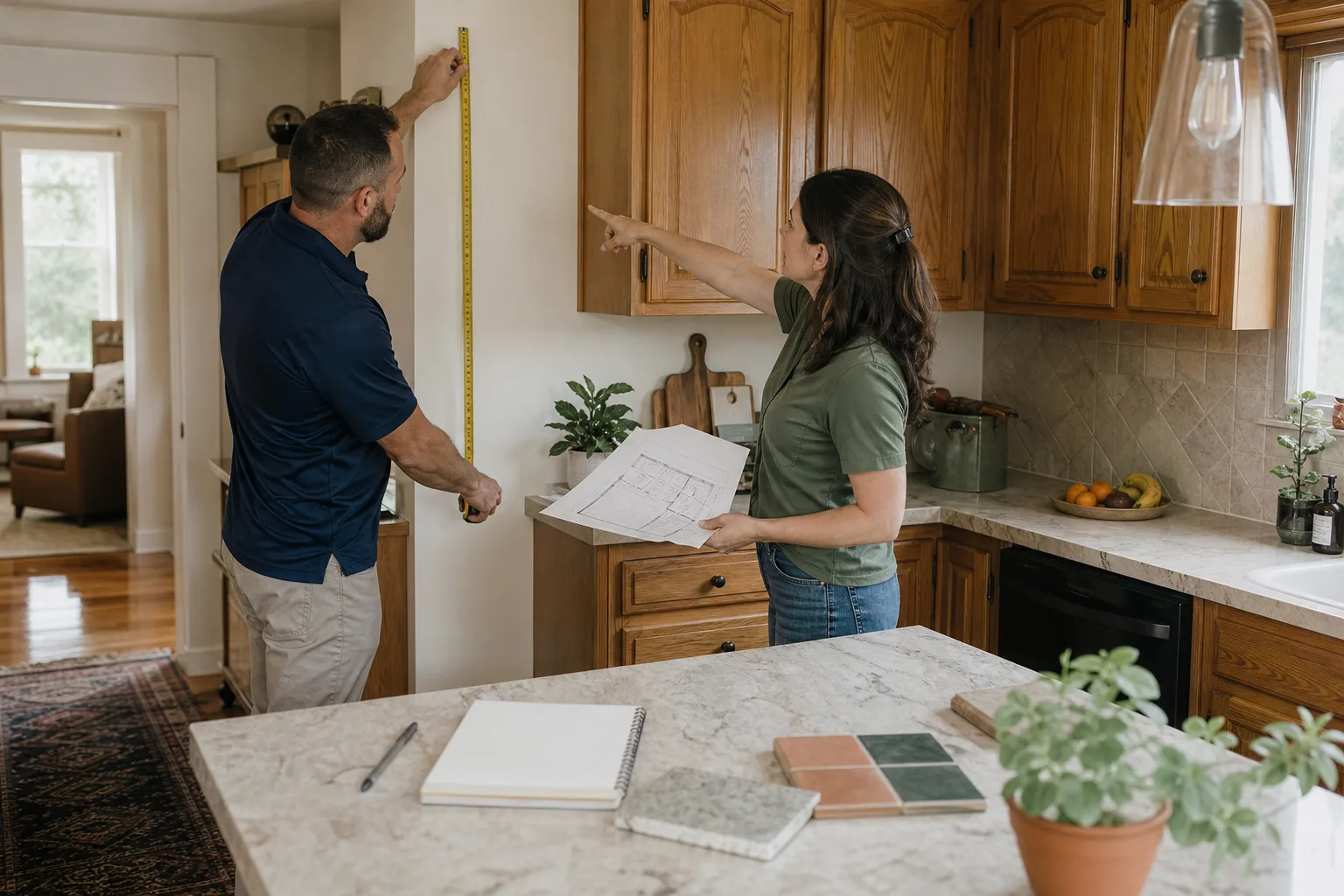
- A written price is a fixed number, in writing, before any work starts. It means the contractor has done the measuring, the material takeoff, the site walk, and the subcontractor review well enough to commit to a number. If something unknown appears, the written price means the change is documented, priced, and approved by you before it happens.
Every Elmstead Remodeling Pasadena project begins with a written price, given before any work starts, on every project. That is not optional and not a premium add-on. It is the only way we work. Change orders, when they occur, are written, priced, and approved by you before the work proceeds. If you are comparing bids and one contractor will not put a fixed number in writing before you sign, keep looking.
Step 6: Confirm the Clean-Up Standard Before You Sign
The finish of a Pasadena remodel is not the last piece of trim. It is the condition of your living room floor the week the crew was demoing the kitchen. Clean-up is where a contractor’s actual standards show, far more than in a showroom.
What to confirm in writing:
- Daily clean-up protocol. The crew should sweep or vacuum the work zone at the end of every day, run a magnetic nail sweeper, and bag debris rather than leaving open piles.
- Floor protection. Drop cloths on all traffic paths from the door to the work zone, plus hard floor protection under tool staging areas.
- Dust barriers. Sealed plastic sheeting between the work zone and the rest of the house, with taped seams and a defined entry point.
- Final clean-up. A deep clean of the finished space before the final walkthrough, with all dust, debris, and staging materials removed.
- Proof of clean-up. A photo of the clean-up before the crew leaves, provided to you, is included on every job we do in Pasadena. You should never have to take our word for it.
This is also where the 365-Day Done Right Promise matters. After the job is complete, if something is not done right, we make it right. The promise is stamped on every project, and it extends through the first year in your house, after the seasons have shifted and the house has settled. That is the longest-standing post-project commitment in our service area.
Common Mistakes to Avoid
- Hiring on price alone. The lowest bid in Pasadena usually excludes permit fees, debris hauling, or dust barriers. By the time those are added, the “cheap” bid costs more than the mid-range one that included them from the start.
- Skipping the CSLB check. Ninety seconds on cslb.ca.gov tells you the classification, the license status, and the complaint history. Skip it and you are trusting a stranger with your largest asset.
- Signing a contract without start and completion dates. A contract without dates is a suggestion. Pasadena’s permitting process already adds unpredictable time; the contract should lock down what the contractor controls.
- Assuming every crew member is background-checked. Ask. Many contractors run checks only on employees, not on day laborers or subcontractor crews. A uniformed, background-checked crew is a different level of accountability.
- Ignoring the brand of materials until it is too late. A contract that says “cabinets” instead of “KraftMaid” or “Wellborn” gives the contractor a blank check to install whatever their supplier had in stock. Name the brand tier or the exact product before you sign.
- Not asking about lien waivers. A contractor who fails to pay a supplier can trigger a mechanics lien on your Pasadena property, even if you paid the contractor in full. The contract should require lien waivers from every supplier and sub.
- Rushing the permit conversation. Some contractors will suggest skipping permits to save time and money. In Pasadena, unpermitted work can complicate resale and create liability. A contractor who suggests skipping permits is telling you something important about how they operate.
When to Call a Professional
Call a professional when the project involves structural changes, electrical or plumbing work, or any scope that will require a Pasadena building permit. Also call a professional if you have children or pets in the house during construction; a crew that is not set up for dust containment and daily clean-up will make your home unlivable for weeks. If you are planning a bathroom remodel in Pasadena, a kitchen overhaul, or a whole-home renovation, the conversation should start with a written price and a clear clean-up plan, not a vague estimate and a promise. Elmstead Remodeling Pasadena offers free estimates in Pasadena. Call (626) 714-2992 to schedule yours.
Frequently Asked Questions
Kitchen remodels in Pasadena typically range from $35,000 to $90,000 depending on scope, and bathroom remodels from $18,000 to $45,000, with whole-home renovations running higher. For a detailed Construction Cost Breakdown: The Pasadena Homeowner’s Reference for 2026, see our latest analysis. The number that matters is not the initial bid but the final total, and the final total is controlled by whether the contract names permit fees, debris hauling, dust barriers, and material brands up front. Call (626) 714-2992 for a written price on your specific project; the estimate is free.
Go to cslb.ca.gov, enter the contractor’s name or license number, and verify that the license is active and that the classification matches your project type. For a whole-home remodel, you want a B (General Building) classification at minimum. For concrete, lath and plaster, or tile work, confirm the C-8, C-35, or C-54 classification respectively. It takes about 90 seconds.
That depends on the contract. If you have a written price with named materials, named subcontractors, and a defined change-order process, the price should not move unless you approve a change in writing. If you have an estimate, the price can rise as soon as walls are opened or materials are ordered. Every Elmstead Remodeling Pasadena project starts with a written price before any work begins.
Yes. Pasadena requires permits for most structural, electrical, and plumbing work, and the permit fees should be included in the written price. We pull the permits, schedule inspections, and walk the project through to final approval. Skipping permits is not faster and not cheaper; it is a liability that follows the house.
A mid-size kitchen remodel in Pasadena typically takes four to eight weeks from demo to final walkthrough, assuming permits are already in hand. Pasadena’s permit review timeline can add one to three weeks before work begins. Your contract should name a start date and a completion date, with a defined process for weather or permit delays.
We seal the work zone with plastic sheeting and zip walls, run a magnetic nail sweeper over the floor at the end of every day, store chemicals in locked containers, and remove or lock tools overnight. Shoe covers and drop cloths are included on every job. We also schedule the loudest work during school hours where possible and tell you in advance which days those will be. Call (626) 714-2992 to talk through your specific household.
The Bottom Line
Hiring a construction contractor in Pasadena comes down to two checks most homeowners skip: verifying the CSLB license and classification for your specific project, and reading the contract for what it omits. For the full picture, read The Complete Guide to Construction in Pasadena. Require a written price before any work starts, confirm the clean-up protocol in writing, and ask about child and pet safety during demo. The contractor you want is the one who names the drop cloths, the quiet hours, the lien waivers, and the material brands without being asked. That is the standard we hold at Elmstead Remodeling Pasadena, and the standard you should hold anywhere.
Written by Graham Stein, Owner at Elmstead Remodeling Pasadena, serving Pasadena since 2005.
See the difference
 Before
 After
After Before
 After
After Before
 After
After